Ice caves are the new cave biome of the Ice Caves drop, playable now in 26.4 Snapshot 3 on Java and in the Bedrock preview. They are also the only place where frostbites spawn in large numbers, which makes them the place to go for ice balls, ice crystals and icicles.
The short version: ice caves generate under the colder biomes, so you find them by finding snow and ice on the surface first, then going down.
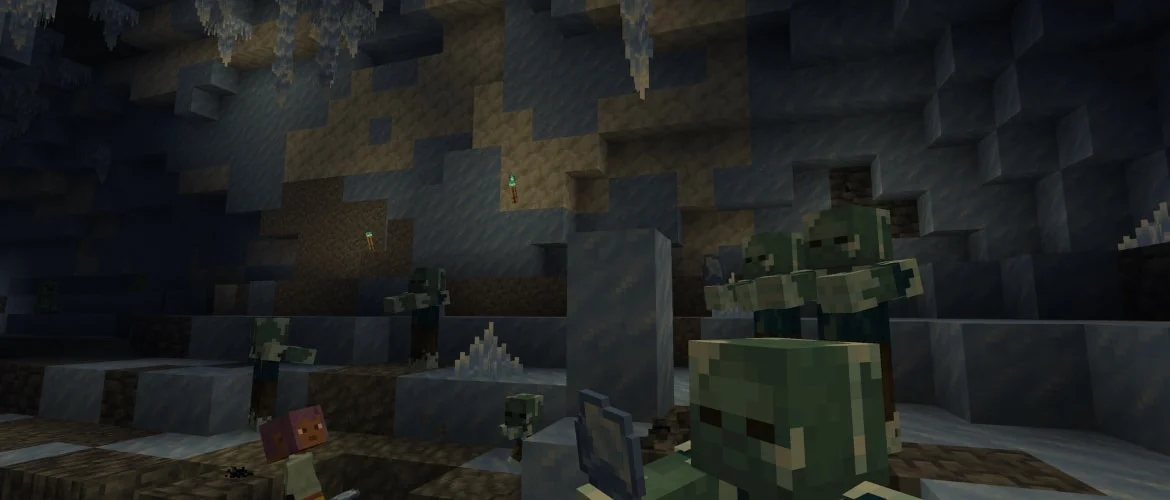 Image: Mojang Studios, from the official 26.4 Snapshot 3 announcement.
RateUnder cold biomes
XP levelIce crystals, icicles, ores
Build timeSnapshot only
DifficultyBeginner
Snapshot feature. Ice caves exist only in 26.4 snapshots (Java) and the Bedrock preview behind the Drop 4 of 2026 experiment. They generate only in new chunks, so use a new world or travel past your explored area.
Quick answers
- Where do ice caves spawn? Underground, under the colder Overworld biomes. Mojang's notes say "under the colder biomes"; on Bedrock they occasionally break through to the surface.
- What is the fastest way to find one? Use
/locate biome in a creative or test world and pick the ice caves entry from the suggestions. In survival, find a snowy or icy surface biome and explore its caves.
- How do you know you are in one? Walls of packed ice and calcite, icicles across the ceiling, ice crystals on the floor, and the F3 screen showing the ice caves biome.
- What spawns there? Normal cave mobs plus strays and frostbites. Ice caves have the highest frostbite share of any biome, 9.62% of hostile spawns in Java.
Step 1: find the cold biomes on the surface
Ice caves sit under the cold part of the world. Good surface biomes to start from:
- Ice spikes, frozen peaks, snowy plains and snowy slopes
- Frozen rivers and jagged peaks at the edges of cold regions
These are also the biomes where frostbites spawn on the surface, which is a useful sign: if frostbites are walking around at night, you are in the right climate. The cave biome underneath is placed by the world's climate noise, so the larger and colder the snowy region, the better your odds.
Step 2: get underground
Ice caves are cave biomes, so they show up where the cave systems are. Two approaches work:
- Follow existing caves and ravines in the cold region down, looking for walls turning from stone to pale ice and white calcite.
- Check with F3. The debug screen shows the biome at your position. Walk the caves until it reads ice caves.
If you are in a creative or test world and just want to see one, /locate biome with the ice caves entry from the autocomplete list takes you straight there.
Step 3: confirm and orient
You are in an ice cave when you see:
- Packed ice and calcite instead of stone and dirt.
- Icicles hanging from the ceiling, and large icicles made of packed ice on the floor and ceiling.
- Ice crystals glowing faintly on the floor, and occasional snow patches.
- No glow lichen, so it is darker than it looks in screenshots.
What to mine
Ores: look for the stone pockets
Ice caves still have ore, but not in the walls. Every ore in an ice cave generates inside a pocket of stone or deepslate that the game places first. Coal, copper, iron, gold, redstone, lapis and diamonds all use this rule, so grey patches in the ice are where the ore is. Scan the walls for stone, not for ore.
Ice crystals
A light-giving block you can place in any direction, like an amethyst cluster. Mine them for decoration. They break if the block they are attached to is removed, so do not mine the support first.
Icicles
Collect them for building or traps. They only grow in darkness, up to 5 blocks long, and they break when a light source is nearby.
Staying alive
Ice caves are dangerous in two specific ways.
Falling icicles. A falling icicle damages whatever it hits, and landing on one hurts even more. Because light breaks icicles, the safest way through is to place torches as you go: you clear the ceiling and light the cave at the same time.
Frostbites. They hit with Freezing up close and throw ice balls from range. In Java, leather armor protects you from the freezing the same way it does in powder snow, so a single piece of leather in your kit goes a long way. Frostbites have 24 health, more than a zombie, so bring a proper weapon.
Watch for powder snow too: frostbites can stand on it, but you sink into it unless you wear leather boots.
Why ice caves are worth the trip
- Ice balls, the only ingredient for Potions and Arrows of Freezing, drop from frostbites. Ice caves have the most frostbites. If you want a renewable supply, our ice ball farm mechanics guide covers the zombie-conversion route.
- Decoration blocks you cannot get anywhere else: ice crystals and icicles.
- Diamonds and other ores in easy-to-spot stone pockets.
Frequently asked questions
Where do ice caves generate in Minecraft?
Underground, under the colder biomes of the Overworld, such as ice spikes, frozen peaks and snowy plains. On Bedrock they can occasionally reach the surface.
How do I locate an ice cave with a command?
In a world with cheats on, use /locate biome and choose the ice caves biome from the suggestions.
Do ice caves generate in old worlds?
Only in newly generated chunks. Areas you explored before updating will not change.
Are there diamonds in ice caves?
Yes. Ores, including diamonds, generate inside pockets of stone or deepslate within the ice.
What mobs spawn in ice caves?
The usual cave mobs, plus strays and frostbites. Ice caves give frostbites their highest spawn share, 9.62% of hostile spawns in Java.