Most mobs in Minecraft simply spawn. The sniffer does not, and Mojang's own explanation is short and striking: sniffers don't spawn naturally because they're extinct.
That makes the sniffer the only creature in the game you bring back from the past. You dig its egg out of sunken ruins with a brush, hatch it, and then it spends its life digging up seeds of plants that no longer grow anywhere in the world. Every part of the sniffer points backward in time, which makes it one of the most lore-rich mobs Mojang has added.
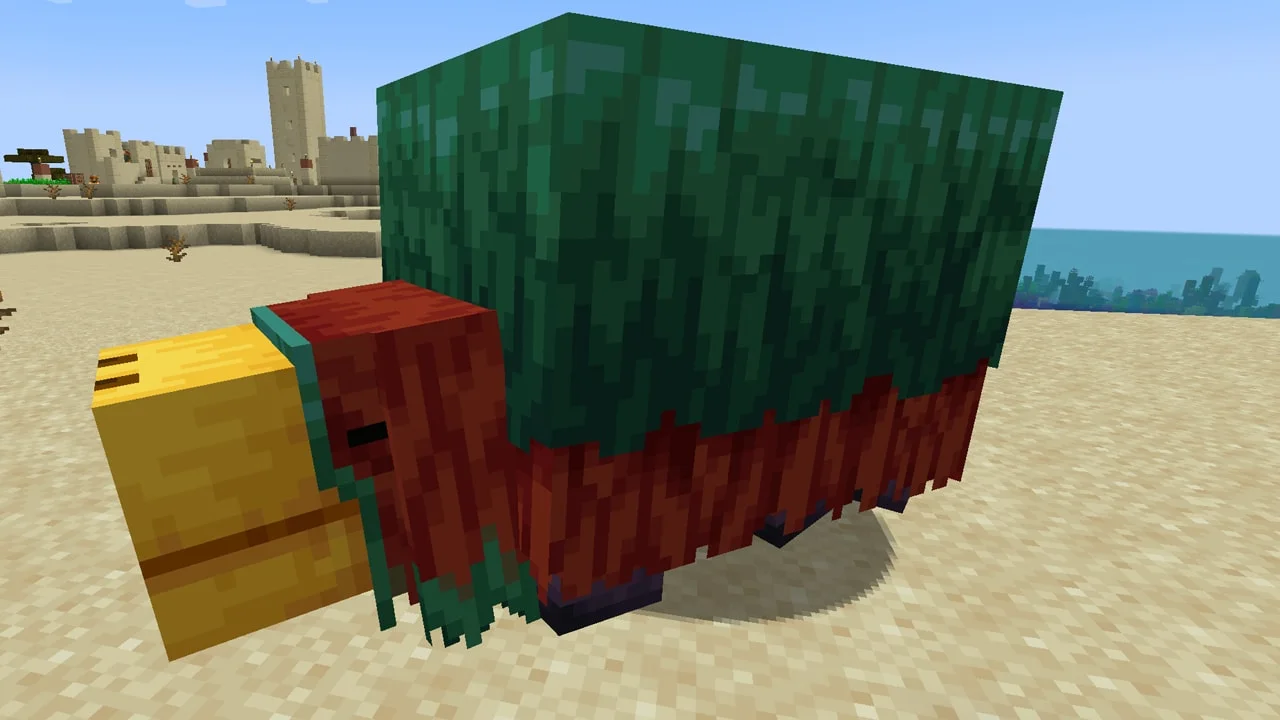 Image: Mojang Studios, from an official minecraft.net article.
One fact is official, the rest is reading. Mojang describes sniffers as extinct. Everything about what world they came from is interpretation, labelled as such below.
Quick answers
- Why is the sniffer extinct? Mojang says sniffers are extinct but has never said why. The game shows only that they died out and left eggs behind.
- Where do sniffer eggs come from? Brushing suspicious sand in warm ocean ruins. The egg hatches after 20 minutes, or 10 minutes on a moss block.
- What does a sniffer dig up? Torchflower seeds and pitcher pods, with an equal chance of each. These "ancient seeds" grow plants found nowhere else.
- When was the sniffer added? In 1.20 Trails & Tales, after winning the 2022 mob vote with 55% of the vote, the largest share any mob vote winner ever had.
The facts
- Added: Java 1.20, the Trails & Tales update, alongside archaeology: the brush, suspicious sand and gravel, pottery sherds and trail ruins.
- Obtained: only by hatching a sniffer egg, found by brushing suspicious sand in warm ocean ruins, or by breeding sniffers you already have.
- Behavior: it wanders, sniffs the air, and digs into dirt, grass, moss, mud, podzol and similar soft blocks to pull up an ancient seed. It cannot dig in mycelium.
- Seeds: torchflower seeds or pitcher pods, at equal chance. Breeding sniffers uses torchflower seeds.
- Stats: 14 health, and a big body (1.75 blocks tall, 1.9 wide). Babies, called snifflets, take 40 minutes to grow up.
Clue 1: the eggs are buried in sunken ruins
Sniffer eggs come from warm ocean ruins: stone and sandstone buildings now under the sea, half buried in sand, that you excavate with a brush.
Interpretation: the people who built those ruins kept sniffer eggs. You do not store eggs of a wild animal in your buildings. They were valued, maybe raised, maybe farmed. When the buildings sank, the eggs survived in the sand long after both the builders and the sniffers were gone.
That links the sniffer to the game's biggest open mystery, the lost people behind Minecraft's ruins, covered in our Ancient Builders theory and who built Minecraft's structures.
Clue 2: it remembers plants that no longer exist
The sniffer's whole job is to find ancient seeds. Torchflowers and pitcher plants do not grow wild anywhere in the world; the sniffer is how you get them.
Interpretation: the sniffer is carrying knowledge of a world that has changed. It sniffs the ground for plants that were common in its time and finds their buried seeds, the last traces of an older landscape. In a sense the sniffer is a living map of what Minecraft's world used to look like.
The sniffer spends its life searching the ground for a world that no longer exists, and sometimes it finds a piece of it.
Clue 3: it arrived with archaeology
The sniffer did not come alone. It shipped in the same update as archaeology: brushes, suspicious blocks, pottery sherds, and trail ruins full of the belongings of people who are gone.
Interpretation: Mojang built a whole update around digging up the past, and the sniffer is its living centerpiece. Sherds tell you people made pottery; trail ruins tell you they built roads and homes; the sniffer tells you what lived alongside them. Of everything archaeology uncovers, the sniffer is the one thing you can bring back to life.
Why did the sniffers die out? The theories
The game does not say. Three readings come up most often:
- They went down with their keepers. If the people of the ocean ruins kept sniffers, their disappearance and the drowning of their cities could have ended the sniffers too. The eggs in the sand are what was left.
- Their world changed. The plants they ate and dug for no longer grow. A creature built around an older landscape may simply have outlived its world.
- It is just good design. "Extinct" gives a reason the mob never spawns, and makes hatching one feel like an achievement. There may be no deeper story at all.
None of these is confirmed. The honest summary is that Mojang chose to make the sniffer extinct on purpose, which is itself a lore decision: it tells you the world had a history before you arrived.
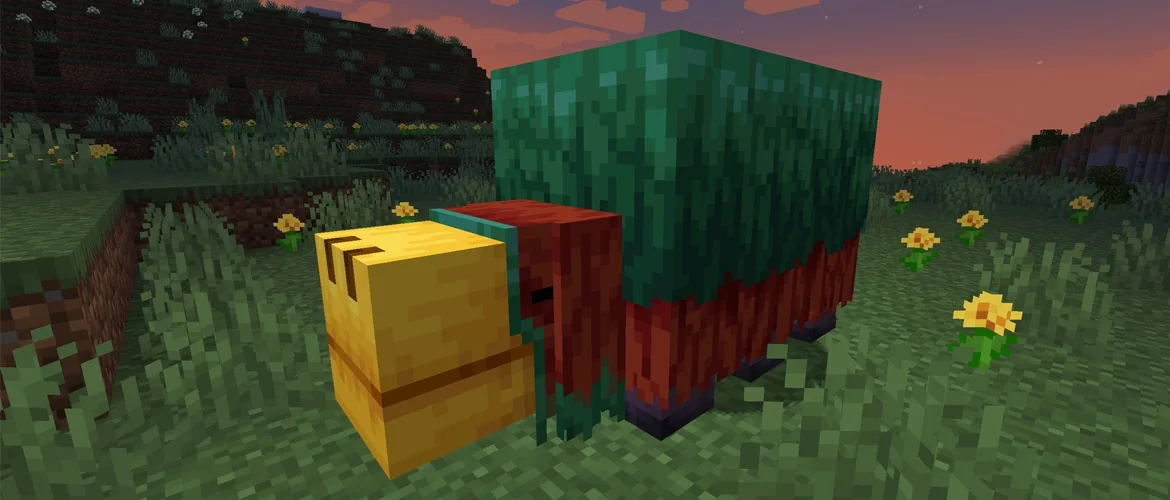 Image: Mojang Studios, from an official minecraft.net article.
Bringing one back
If you want to hatch your own:
- Find warm ocean ruins in a warm ocean.
- Brush suspicious sand in and around them until a sniffer egg drops (it is one of several possible finds).
- Place the egg on a moss block to halve the hatching time to 10 minutes.
- Feed sniffers torchflower seeds to breed more.
Then let it sniff. The seeds it finds are a garden no one has planted in a very long time.
Frequently asked questions
Is the sniffer extinct in Minecraft?
Yes. Mojang describes sniffers as extinct, which is why they never spawn naturally. You bring them back by hatching eggs found in warm ocean ruins.
Why did the sniffers go extinct?
Mojang has never said. Common theories link it to the people of the sunken ruins where the eggs are found, or to the loss of the ancient plants the sniffer depends on.
Where do you find a sniffer egg?
By brushing suspicious sand in warm ocean ruins.
How long does a sniffer egg take to hatch?
20 minutes normally, or 10 minutes if placed on a moss block.
What seeds does a sniffer find?
Torchflower seeds and pitcher pods, each with an equal chance.